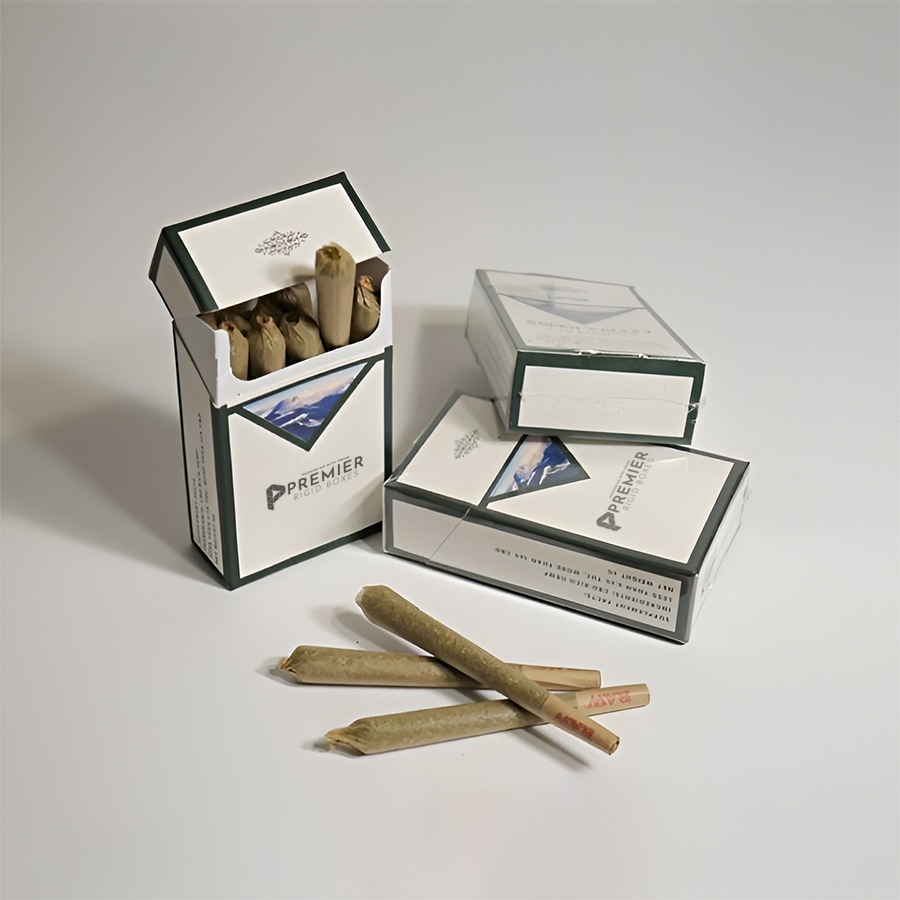
Little Tube That Became a Giant
If you enter a legal marijuana shop in 2026, you’ll see rows and rows of tubes. Plastic tubes. Glass tubes. Bamboo tubes. Cardboard tubes with shiny labels. They are filled with pre-rolled cigarettes, or “pre-rolls” as they are commonly known. Just five years ago, the tubes were on the fringes. But now they are at the heart of a $25 billion industry that is disrupting the packaging industry.
Let’s do it again. Twenty-five billion dollars. That’s bigger than the entire world market for lipstick tubes, perfume bottles, and pill bottles. And it is all from one product: a little tube that protects a pre-rolled cigarette from the factory to the consumer.
By 2016, pre-roll packaging was no longer just about cannabis. It’s a packaging story. The lessons learned here, the child-proof clicks, the humidity absorbers, the tubes that go away when you throw them out, are moving into pharmaceutical, food, and beauty. Big tobacco began this trend decades ago. Marijuana perfected it.
Why Pre Rolls Need Special Boxes
A luxury pre roll packaging is fragile. It is simply a paper tube filled with an herb. Squish it, and it breaks. Put it in the sun, and the paper dries and splits. Leave it in a hot car, and the paper glue melts. So the packaging needs to be safeguarded in ways that a soda can or a cereal box doesn’t.
But that is not the hard part. The hard part is the law. Each state in the country that allows marijuana has its own packaging regulations. Most have child-safety closures. So a container that a five-year-old can’t open, but a 75-year-old arthritic can. A few require opaque containers. Others require reclosable caps so it doesn’t go off. Others want biodegradable packaging by 2028.
How do you do all this in a tube that costs less than 25 cents to manufacture? So that is what the pre-roll packaging industry did. And the answers are spilling into all other small, fragile, valuable products industries.
The Numbers Behind the Boom
Let’s begin by looking at the size of this industry in 2026. Here’s the table that shows the facts behind the $25 billion market.
Let me show you the scale of this industry in 2026. This table lays out the key facts that drive the $25 billion market.
| Category | 2026 Data |
|---|---|
| Global pre roll sold annually | 18.6 billion |
| Total pre roll packaging value | $25.3 billion |
| Average cost per basic tube | $0.18 |
| Average cost per premium tube (glass + child-resistant cap) | $1.45 |
| Most common material | Recycled PET plastic (54%) |
| Fastest-growing material | Molded bamboo fiber (up 210% since 2024) |
| Percentage with humidity-control liner | 67% |
| Percentage that are fully home-compostable | 22% |
| Average tubes per cannabis consumer per year | 47 |
These numbers tell a clear story. Most pre roll tubes are still cheap plastic.
Three Innovations Changing Everything
Three innovations from the pre-roll packaging industry are being mimicked by others.
Innovation 1: the one-handed child-resistant cap. Old-style child-resistant caps involve pushing down and twisting. This is difficult for people with weak hands. The new pre roll tube has a squeeze and twist cap. No pushing down. Simply squeeze and twist. A child cannot figure it out. An adult knows how. This is now being adopted by medicine bottles. So do some vaping cartridges and gummy vending containers.
Innovation two: the humidity coin. A lot of pre roll tubes have a small disc, the size of dime, inside the cap. The disc contains a salt gel that maintains the air in the tube at 62 percent humidity. This is the ideal humidity for a pre roll. Any lower, and the paper will crack. Too wet, and it will go out. The technology is now appearing in cigar boxes, guitar case humidifiers and even bread containers.
Innovation three: the seed tube. A number of brands are now offering pre rolls in tubes made from recycled cardboard with seeds for wildflowers. After smoking the pre roll, you water the tube, rip it up and bury it. Wildflowers grow. The tube disappears. This seems like a trick, but it’s not. The beauty industry is experimenting with seed tubes for lipstick and deodorant.
Garbage Problem Nobody Solved
Let’s be clear. Pre roll tubes still mostly end up in the landfill. Even the recyclable ones. Even the compostable ones. Smoke the pre-roll, look at the used tube and put it in the trash can. They do not rinse it. They do not check the recycling symbol. They just throw.
The industry knows this. But they also know that consumer guilt may lead to fewer sales. So, instead of talking about recycling, many brands don’t. Instead, they talk about reuse. Store your rollies in your tube. Store sewing needles in it. Store coins in your car’s glovebox. One company printed the tube with three dozen ideas for reuse. Customers loved it. There was a 40% reduction in waste complaints.
The Future Is Smaller
The most exciting development in best pre roll packaging for 2017 and beyond is smaller sizes. Brands have woken up to the fact that most pre roll tubes are half-filled with air. That air costs money to ship. There are new telescopic tubes that can flatten out to half their length. Or flat-fold boxes that spring into a tube shape when opened. Another company even has pre rolls in a straw. You drink your iced coffee through the straw, then pull out the pre roll.
Ridiculous? Maybe. But that is how innovation works. You have a hundred crazy notions. Ninety-nine fail. One changes everything.
Final Words
Let me leave you with this. A pre roll tube is a little tube. But the $25 billion it makes has funded better child-resistant caps, better humidity packaging, and better biodegradable materials than any other packaging industry. The next time you take a pill out of an aspirin bottle that squeezes, not turns, thank a pre roll engineer. When your bread is soft for two weeks thanks to a humidity disc in the package, thank a pre roll engineer. And when you see a flower bloom from your old lipstick case, you will know who to thank.